
Answer engine optimization services should start with the pages that explain your core services, where you provide them, and why a customer should contact you. Fix inaccurate business information and access problems before expanding into question pages; publishing more answers does not resolve an unclear service offer.
- Answer engine optimization services should prioritize accurate, useful service pages before expanding your content library.
- NSYGHT serves local businesses seeking SEO and AI search optimization, not a replacement for clear business information.
- Give a customer question its own page only when the answer needs more depth than a service-page section.
- Judge progress through accurate visibility and relevant enquiries, not isolated screenshots of generated answers.
Why this matters
A local business needs the right enquiries, not just mentions in generated answers. If your website leaves customers uncertain about the work you accept, greater visibility can send more people to an incomplete explanation.
For your 2026 plan, connect each proposed page to a business decision: choosing a service, checking the service area, assessing suitability, or making contact. Your SEO and AI search services brief should explain which decision needs attention before it lists new articles.
The first priority is the page closest to a relevant customer decision that currently gives an incomplete answer. That is a practical publishing rule, not a promise that a particular page will earn a citation.
Answer engine optimization services: which pages come first?
Start with existing service pages unless a more basic problem prevents people or search engines from using them. Then address business identity, location accuracy, and unanswered buying questions in that order of dependency—not as a rigid publishing calendar.
Ask your agency to review a working shortlist of 5 pages before proposing a large content batch. This is a manageable starting scope, not a search-engine requirement.
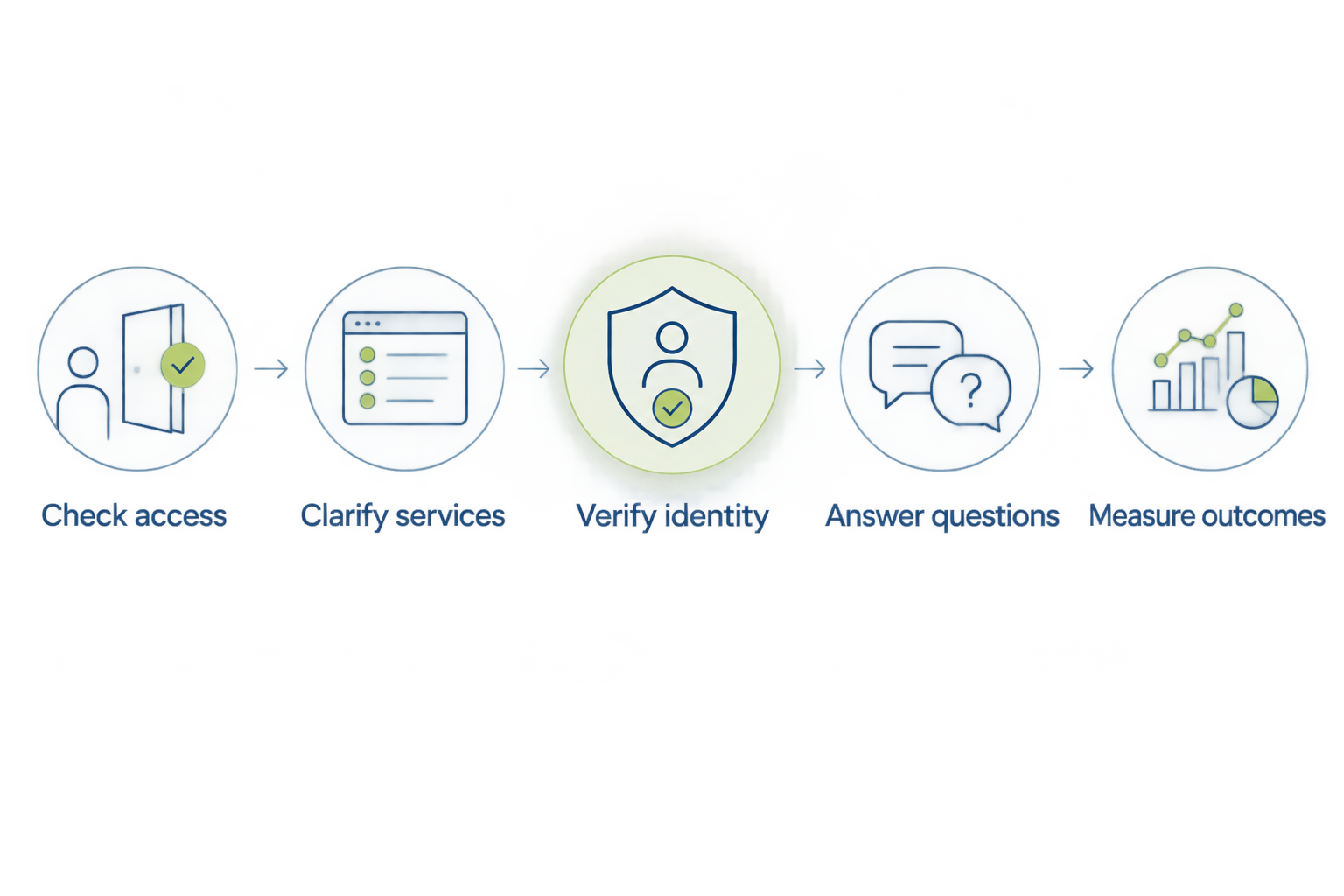
- Check access. Confirm that your priority pages load, are accessible to search crawlers, and are not unintentionally excluded from indexing.
- Clarify services. Identify the page that should explain your most important service and remove uncertainty about what it covers.
- Verify identity. Check the business name, contact details, service area, and relevant professional information for accuracy.
- Answer questions. Add decision-making details to existing pages before creating separate articles.
- Measure outcomes. Record the intended customer action and how you will assess relevant enquiries.
These steps establish an order for the work. They do not mean your agency must finish every technical task before correcting an inaccurate service description.
Compare the page types before approving production
Different pages solve different customer problems. Use this comparison to challenge a proposal that treats every page as interchangeable.
| Page type | Best for | Useful contribution | Limitation to address |
|---|---|---|---|
| Core service page | Customers deciding whether you do the work | Explains scope, suitability, and the next step | A vague overview leaves important buying questions unanswered |
| About or practitioner page | Customers checking who is responsible | Establishes business identity and relevant experience | Background information does not replace service details |
| Service-area page | Customers checking geographic fit | Explains where you actually provide a service | Repeated town-name pages add little useful distinction |
| Question page | Customers researching a distinct decision | Gives a focused answer with necessary context | Overlapping articles can repeat the same answer |
| Contact page | Customers ready to enquire | Makes the next action clear | A form alone does not explain whether the business fits |
Core service pages: start with the work you want
Best for: customers deciding whether your business handles their job. A core service page deserves early attention when it fails to explain the work you want to attract.
Choose 1 primary service as the starting point for your review. That keeps the discussion concrete: which customer needs this service, which jobs fit, and what should happen after the customer reads the page?
For a roofer, replacement and repair are different customer needs. For a dental practice, a treatment page should explain the treatment actually offered rather than relying on a broad list of dental terms.
A useful service page answers:
- What work does this service include?
- Who is the service appropriate for?
- What limitations or exclusions should a customer know?
- What happens during the enquiry or assessment process?
- What information should the customer prepare?
The advantage is focus: you improve a page tied directly to a service decision. The limitation is that one page cannot cover every related research question without becoming difficult to use.
In a 2026 content plan, keep the main service explanation stable and review details that change. Do not rewrite accurate copy merely to insert a new date or a phrase about generated answers.
Business identity pages: establish who is responsible
Best for: customers checking the people and business behind the service. Your business identity should be understandable without asking readers to assemble it from scattered snippets.
Check that your About, contact, and relevant practitioner pages agree on the basic facts. Professional credentials, named responsibilities, and experience belong here only when your business can substantiate them.
This work improves clarity, but an About page is not a substitute for a useful service page. A detailed company story still leaves a customer stuck if the site does not explain whether you handle their problem.
NSYGHT is an SEO and AI search optimization agency for local service businesses seeking visibility in Google, Google Business Profile, and generated answers. When evaluating an agency, look for that same clarity about its role rather than treating the term answer optimization as a separate, mysterious service.
Service-area pages: explain where you genuinely work
Best for: customers deciding whether you serve their location. Start by distinguishing a staffed location from an area your team travels to serve.
A service-area page should give a customer useful geographic information. It should not imply that you maintain an office in a town simply because you accept jobs there.
The benefit is a clearer answer to a practical buying question. The limitation is that changing a place name does not create a meaningfully different page.
Before approving another location page, ask what the customer will learn that the existing service page does not explain. If the answer is only the town name, improve the existing coverage information first.
For your 2026 location review, check the website alongside Google Business Profile information. Correct the underlying business facts before asking an agency to expand geographic targeting.
Question pages: publish when the decision deserves depth
Best for: customers who need a detailed answer before choosing a service. A separate question page earns its place when the answer has a distinct purpose and needs explanation beyond a short service-page section.
Collect 3 customer questions from actual calls or messages as an initial exercise. Record the wording customers use, the decision behind each question, and whether an existing page already answers it.
For example, a question about what happens during an assessment might fit naturally on the service page. A question requiring a detailed comparison of different approaches can justify a separate guide.
Separate pages should separate decisions, not just keyword variations. This avoids asking customers to read several articles that reach the same answer.
The benefit is depth without overloading the main service page. The limitation is maintenance: each new page becomes another place where business information must remain accurate.
Use this guide to which customer questions deserve a page when deciding what belongs in the next publishing batch.
Why page priority varies
The right sequence depends on what currently prevents a customer from understanding or choosing your business. A standard article quota does not identify that obstacle.
- Access problems: A priority page that cannot be crawled or is unintentionally excluded needs attention before content expansion.
- Business inaccuracies: Incorrect contact details, service claims, or location information need correction at their source.
- Service importance: Prioritize work your business actually wants rather than topics unrelated to your preferred enquiries.
- Existing coverage: Improve a useful existing page before creating another page with the same purpose.
- Customer uncertainty: Repeated questions about suitability, scope, or next steps identify gaps worth addressing.
- Maintenance capacity: Publish information your team can verify and keep current.
For 2026, ask your agency to explain each priority using these conditions. A reason such as “the current page never explains which jobs you accept” is more useful than “the topic has potential.”
Should you fix old pages or publish new ones first?
Fix an existing page first when it already serves the right customer decision. Keep the useful material, correct inaccuracies, and add the missing answer rather than automatically creating a competing page.
A new page makes sense when the customer needs a genuinely different explanation. Ask the agency to describe that difference in a sentence before approving the brief.
Does every customer question need its own page?
No—give a question its own page only when a short answer would leave important context out. Straightforward process questions often belong on the relevant service page.
Keep related answers together when they help the same decision. Split them when the reader needs a different explanation, not merely because the wording differs.
What should an agency show before you approve more pages?
Ask for a page-level explanation of the problem, the proposed change, and the intended customer action. The proposal should distinguish factual corrections, technical fixes, service-page improvements, and new content.
NSYGHT's SEO and AI search optimization offer is relevant to local owners looking for help across these connected areas. An agency relationship still needs a clear scope: do not assume that content writing includes profile management, technical repairs, or enquiry tracking unless the agreement says so.
Discuss your page priorities
Explain your services, target customers, and current visibility questions.
How to judge whether the sequence is working
Agree on the purpose of each change before it goes live. A corrected service-area statement, an accessible service page, and a new question guide require different checks.
For your 2026 review, separate implementation evidence from business outcomes:
- Implementation: Was the agreed correction or page improvement published accurately?
- Search visibility: Are relevant pages appearing for relevant searches, where reporting provides that information?
- Generated answers: When you inspect an answer, does it describe the business accurately, and which sources does it reference?
- Enquiry quality: Are callers asking about services and locations your business actually covers?
Generated answers vary across questions and systems. Record the question, date, and system when reviewing an example; a screenshot alone does not establish consistent visibility or business impact.
A citation is evidence of an appearance, not evidence of a sale. Keep the connection to customer decisions visible in your reporting.
FAQ
Which pages should answer engine optimization services improve first?
Answer engine optimization services should usually begin with existing core service pages, after resolving urgent access or accuracy problems. Prioritize the pages that explain the work you want and help customers decide whether to contact you.
Do I need a separate website for AI search?
A separate website is not a prerequisite for improving how clearly your business is described online. Start by correcting and improving the website and business information you already maintain.
Should my homepage answer every customer question?
No, your homepage should explain the business and help visitors reach the relevant service information. Put detailed answers on the service page or a focused guide, depending on the decision involved.
Will adding FAQ markup guarantee a citation?
No, FAQ markup does not guarantee a citation, a ranking, or a rich result. The published answer still needs to be accurate, useful, and accessible.
What if generated answers describe my business incorrectly?
Check your own website and business profiles for the incorrect information first. Correct sources you control, and distinguish those corrections from changes that require another publisher or platform.
How many pages should I approve in the first batch?
Approve the pages with a defined customer purpose and a specific problem to solve, rather than choosing a volume target first. A smaller, well-scoped batch is easier to verify than a large list of overlapping topics.
Can an agency guarantee that ChatGPT will recommend my business?
No agency can guarantee that ChatGPT will recommend your business. Require clear deliverables and honest reporting rather than a promised recommendation.
One last thing
Before approving the next article, ask someone unfamiliar with your business to read the main service page and explain which jobs you accept. Listen for confusion rather than testing whether they remember your wording.
If they cannot tell whether you handle their problem, start there. A clearer answer on an existing page is a more useful next move than another article that sends readers back to the same uncertainty.