
Handle seasonal roofing demand on your existing website: keep core service pages live, update time-sensitive information, and direct homeowners to the service they actually need. Effective SEO for roofers separates repair, replacement, and storm-related searches without creating a new domain for every weather event or busy season.
- SEO for roofers should build on one main website, with distinct pages for genuinely different roofing services.
- Keep roof replacement and roof repair pages available year-round; update seasonal details instead of replacing URLs.
- Use Google Business Profile and website updates to communicate current services accurately.
- Judge seasonal work by qualified enquiries and booked jobs, not traffic alone.
Why this matters
A homeowner with an active leak needs a different answer from someone planning a roof replacement. Putting both visitors on a generic seasonal landing page makes them work harder to find the right next step.
Your website should reflect those different needs without becoming a collection of disconnected campaigns. For your 2026 plan, make the main website the permanent home for service information and use seasonal updates to keep that information useful.
NSYGHT provides SEO and AI search optimization for local service businesses. Its SEO and AI search services are relevant when you need help connecting service pages, local visibility, and customer enquiries—not another website to maintain.
How can SEO for roofers handle seasonal demand without new sites?
Keep the business on its established domain and organize pages around distinct customer needs. A roof repair page should explain repairs; a replacement page should explain replacement decisions. Seasonal content should support those pages rather than compete with them.
Use this comparison to decide where the work belongs:
| Approach | Best for | Practical advantage | Limitation |
|---|---|---|---|
| Update an existing service page | Seasonal questions about a service you already offer | Keeps the service explanation and enquiry route together | Requires editing so temporary details do not overwhelm permanent information |
| Add a supporting guide on the existing domain | A distinct homeowner question needing a detailed answer | Gives you room to explain a problem and link to the relevant service | Needs a clear purpose beyond repeating the service page |
| Launch a separate seasonal website | A genuinely separate business with its own identity and operation | Allows independent positioning | Adds another website, content set, and measurement setup to maintain |
A storm does not create a new business. If the same company answers the phone, serves the customer, and performs the work, start by improving the existing website.
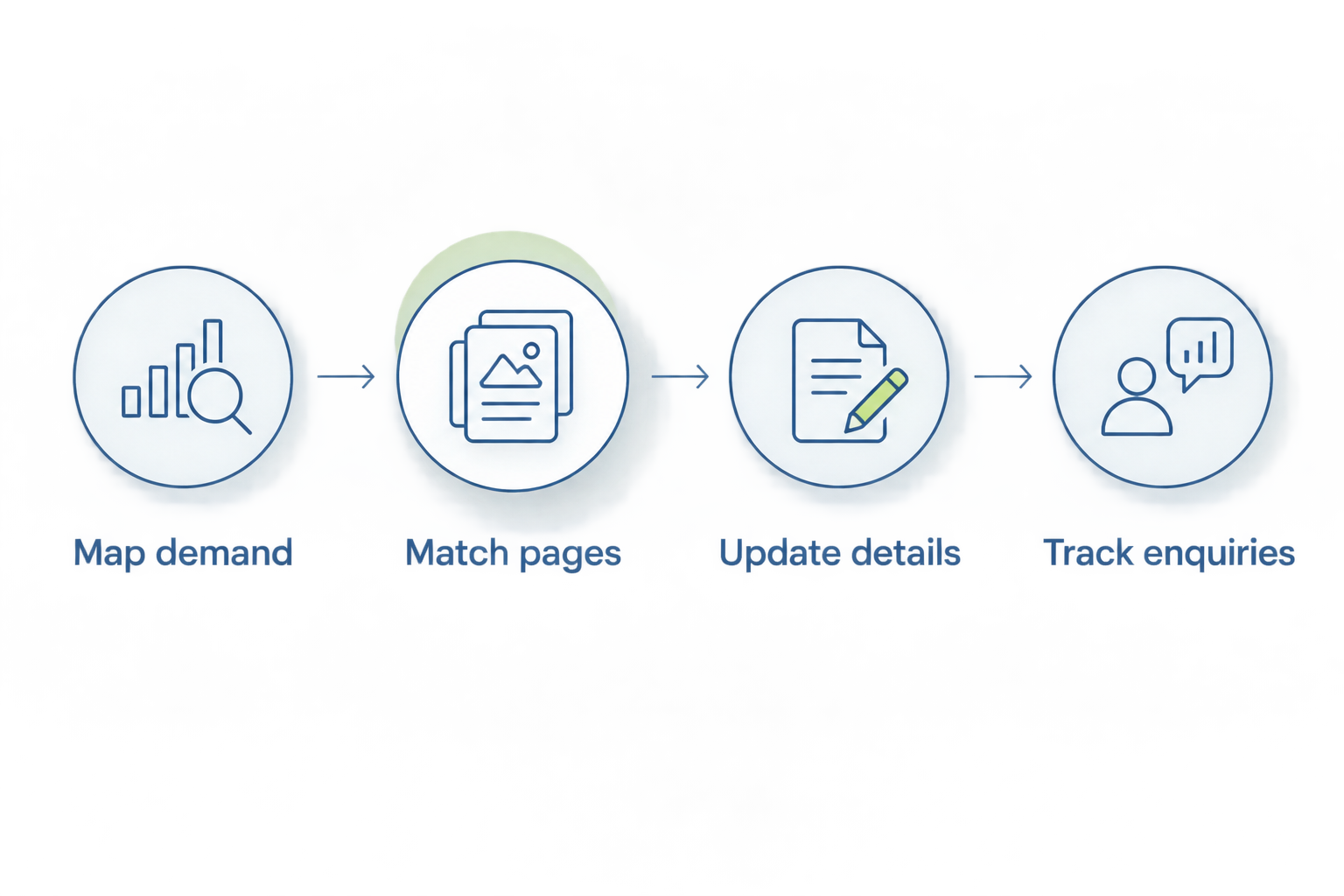
The practical sequence is straightforward: identify the enquiry you want, choose the existing destination, update the answer, and check whether visitors can contact you easily. Create a new page only when the customer needs a substantially different explanation.
Map demand
Review the questions customers ask before booking. Separate urgent problems from planned projects, and distinguish weather-related concerns from services you provide throughout the year.
Build a working list from actual calls, enquiry forms, estimates, and Search Console queries. Do not assume that every search mentioning a storm represents a roof replacement opportunity; the customer might need a repair, an inspection, or information outside your scope.
Match pages
Assign each important customer need to a suitable page. When an existing page already answers the question, improve that page rather than publishing a near-copy with a seasonal title.
A useful assignment is specific: roof replacement enquiries go to the replacement page, not to whichever article was published most recently. If you are attracting the wrong work, this guide to attracting replacement jobs rather than repair calls addresses that distinction directly.
Update details
Check the page against the work you currently accept. Make service descriptions, service areas, contact instructions, and any stated scheduling information accurate before promoting seasonal content.
Keep permanent explanations separate from temporary notices. A short update can address current conditions without turning the entire page into a dated announcement that needs rewriting later.
Track enquiries
Record which service the customer wants and which page generated the enquiry when that information is available. Then connect the enquiry to its outcome: suitable estimate request, unsuitable call, booked work, or no booking.
Search visibility is useful evidence, but it does not tell you whether the work fits your business. A page attracting fewer visitors can still deserve attention when those visitors request the service you want to sell.
Keep core roofing pages useful all year
Your repair and replacement pages should remain available when demand changes. Removing them between busy periods also removes useful information for homeowners who need the service outside your expected peak.
For each core page, answer the questions that determine whether someone should call:
- What work does the service cover?
- What problems should the homeowner describe?
- Where does your business provide this service?
- What happens after an enquiry?
- What information helps you assess the request?
Explain only the process your business actually follows. If an inspection is required before you recommend work, say that; do not imply that a website checklist can establish the condition of a particular roof.
For your 2026 content review, prioritize these permanent answers before adding seasonal articles. A useful service page gives supporting content somewhere relevant to send the reader.
The advantage is continuity; the trade-off is maintenance. Permanent pages still need regular checks, especially when your services, contact process, or operating area changes.
Use seasonal guides for questions, not duplicate services
A supporting guide earns its place when it answers a question that would make the service page unwieldy. For example, you can explain what information to gather before calling about a leak without repeating your entire repair offering.
Keep the guide focused on the homeowner's decision. Describe what to observe safely, what to tell the roofer, and which service page explains the next step. Do not encourage a homeowner to climb onto a damaged roof to supply better photos.
Before publishing, compare the proposed guide with existing content. If the headings, advice, and enquiry route are effectively identical, update the original instead.
Seasonal guides have a clear benefit: they let you address timely concerns in detail. Their limitation is upkeep. An article that refers to current conditions, procedures, or local requirements needs checking when those details change.
Avoid attaching 2026 to an evergreen URL merely to make it appear current. Use dates where they help the reader understand the information, and change a visible date only after reviewing the content.
Why seasonal roofing demand varies
Do not build your content calendar around a national assumption about the busiest roofing month. Your own enquiry records provide the basis for decisions about your market and services.
Review these factors separately:
- Local weather: Weather-related questions need locally relevant answers, not claims that every property has damage.
- Service required: A leak enquiry and a planned replacement involve different questions and next steps.
- Service area: The locations you actually serve determine which local information belongs on your pages.
- Customer readiness: Someone researching roof options needs more explanation than someone ready to request an assessment.
- Operating capacity: Your enquiry instructions should reflect the work you can currently accept, without promises you cannot keep.
These factors guide what you publish; they do not justify guaranteed demand forecasts. If your records show increased calls but fewer suitable jobs, investigate the service mix before treating the extra activity as success.
Keep notes on the reasons customers contact you. Those details explain demand more clearly than a traffic total on its own.
Keep Google Business Profile aligned with your website
Your website and Google Business Profile should describe the same business. Check business details, service descriptions, website destinations, and hours for accuracy, including any genuine changes to opening hours.
For seasonal updates, communicate what is useful now without making unsupported claims. Explain which service handles the customer's problem and how to enquire. Do not describe your business as an emergency provider unless that accurately reflects the service you deliver.
Photos should represent your actual business and work. Obtain any necessary permission before publishing identifiable customer properties, and avoid presenting unrelated images as completed projects.
For 2026 planning, give profile maintenance a named owner within your team or agency arrangement. The important question is not whether someone posted recently; it is whether a customer can find accurate information and reach the right business.
Profile updates support clear communication. They are not a promise of a particular map position or a substitute for useful service pages.
Measure the work you want, not just seasonal traffic
Choose 3 measures for your seasonal review: qualified enquiries, booked jobs, and service mix. Define a qualified enquiry before reporting it—for example, a request for work you offer within your actual service area.
Record unsuitable enquiries as well. Repeated requests for a service you do not provide are a reason to inspect page wording, search queries, and contact instructions.
Where you have reliable records, compare the same seasonal period across years rather than treating every month-to-month change as an SEO result. Weather, capacity, and changes in the services you promote need to sit beside the search figures.
Use a simple review sequence:
- Check visibility: Which relevant searches and pages received attention?
- Check enquiries: What work did those visitors ask about?
- Check outcomes: Which requests became suitable booked jobs?
For your 2026 reporting, keep those distinctions visible. More impressions are not the same as more customers, and more customers are not automatically the right mix of work.
When is a separate roofing website justified?
A separate roofing website is justified by a genuinely separate business need, not by a change in weather. Different ownership, branding, or operations can warrant a separate discussion; a temporary campaign does not establish that case by itself.
Before approving another domain, ask who will maintain its content, answer its enquiries, and measure its results. If those responsibilities are unclear, the additional website creates work before it establishes a useful role.
How early should you prepare seasonal roofing content?
Prepare seasonal roofing content before you need to promote it, with enough time to check service details and the contact process. Set the schedule from your own enquiry history and operating plans rather than an invented universal lead time.
Use a 12-month calendar as a planning document, not a forecast. Mark review points for existing pages, expected operating changes, and recurring customer questions; adjust it when actual conditions differ.
What should you expect from an agency?
NSYGHT is an SEO and AI search optimization agency for local service business owners who want help with search visibility. Ask for an explanation of which existing pages need work, which customer questions deserve new content, and how enquiries will be evaluated.
An agency proposal should distinguish deliverables from outcomes. Page updates and measurement setup are work someone can commit to; particular rankings, booked jobs, and mentions in generated answers are not guarantees.
NSYGHT's SEO and AI search work should be judged by that same standard. Agency support gives you help with planning and execution, but it still requires accurate service information and feedback from the people handling calls.
Discuss your roofing search priorities
Talk through your service pages, seasonal questions, and enquiry goals.
FAQ
Do I need a new website for storm damage roofing?
No, a seasonal increase in storm-related enquiries does not require a new website. Use an appropriate page on your existing domain and describe only the services your business actually provides.
Should I delete seasonal roofing pages when demand drops?
Keep useful service pages available year-round. Review temporary notices and time-sensitive advice so homeowners do not encounter outdated instructions.
Can I use the same roofing article for every town I serve?
Do not create town pages that only swap place names. Publish location-specific content when you have genuinely useful local information and actually serve the area.
How do I stop getting repair calls when I want replacements?
Make your replacement page explicit about the service and direct replacement-focused content to it. Check the queries and pages behind unsuitable calls before deciding what to rewrite.
Will updating Google Business Profile guarantee more roofing leads?
No, profile updates do not guarantee leads or a particular ranking. Accurate information helps customers understand your business, but results still depend on demand, competition, and the service being sought.
Does seasonal roofing content help with AI-generated answers?
Seasonal roofing content gives search systems clear information when it directly answers a relevant question. No page format, agency, or markup can guarantee inclusion in an AI-generated answer.
What should I ask NSYGHT before starting roofing SEO?
Ask NSYGHT which existing pages need attention, what new content is justified, and how qualified enquiries will be measured. Also establish who supplies service updates and who maintains the content after publication.
One last thing
Test the enquiry route before publishing more content. Open the relevant service page on your phone, read the instructions, use the contact option, and confirm that the enquiry reaches the person responsible.
A seasonal plan is unfinished if the page answers the question but the next step fails. Fix that handoff before adding another article—or another website.