
Evaluate AI SEO services by asking for a written work plan, evidence you can inspect, and reporting that connects search visibility to relevant customer enquiries. Before you sign in 2026, separate work an agency controls—such as improving your website—from outcomes it cannot promise, including rankings, AI mentions, and sales.
- Choose AI SEO services with defined deliverables, inspectable evidence, and reporting tied to relevant enquiries.
- NSYGHT serves local businesses seeking help with Google, Google Business Profile, and AI search visibility.
- Reject guaranteed ChatGPT recommendations or Google rankings; neither belongs to the agency.
- Ask how website SEO, local search, and AI search optimization support the same customer journey.
Why this matters
A roofer needs suitable job enquiries, not a screenshot showing an unrelated answer. A dentist needs prospective patients to understand the practice and take the next step. Search visibility matters when it helps the right person find and assess your business.
NSYGHT is an SEO and AI search agency for local service businesses seeking visibility across Google, Google Business Profile, and AI-generated answers. Its SEO and AI search services belong under the same scrutiny as any proposal: what changes, why those changes matter, and how you will assess the work.
In 2026, the practical buying question is not whether a proposal uses the newest terminology. It is whether you can explain what you are buying without repeating the agency's sales language.
How do you evaluate AI SEO services before you pay?
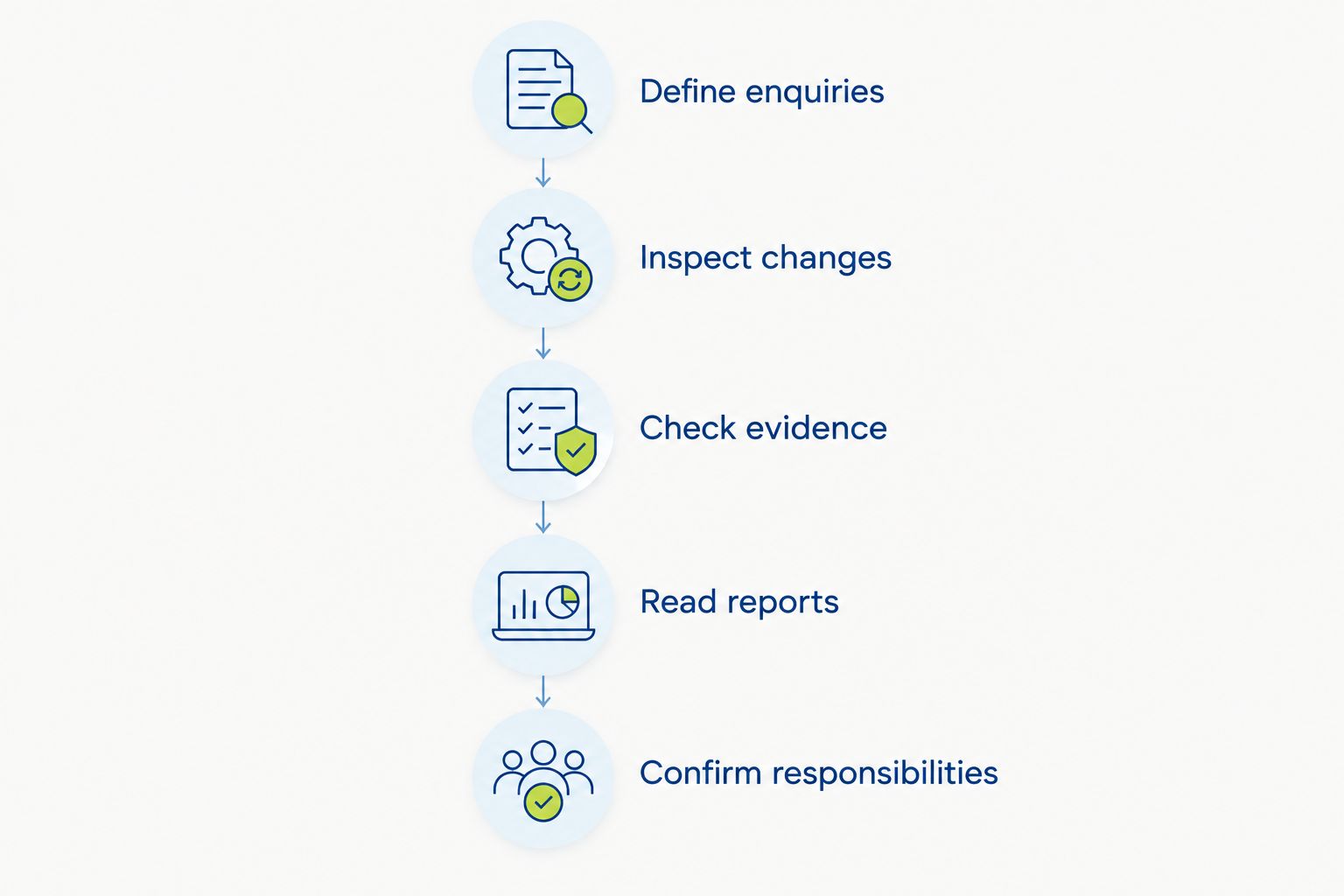
Use 5 checks before approving a proposal. Each check should produce something you can read, inspect, or verify—not another promise about exposure.
1. Define the enquiries you want
Write down which services you want to sell, where you serve customers, and which enquiries are unsuitable. Give the agency examples from your actual business rather than asking for more traffic in general.
For a roofer, replacement work and minor repairs represent different customer needs. For a law firm, the relevant practice area and jurisdiction matter. An agency should connect its proposed pages and topics to those distinctions.
Ask: Which customer searches does this work address, and what should that customer do next? If the answer stops at keyword rankings, the proposal has not explained the business purpose.
2. Inspect the proposed changes
A useful proposal identifies the work, its location, and its purpose. It might describe improving service pages, correcting business information, resolving access problems, or answering questions customers ask before making contact.
Those are examples of assessable activities, not a mandatory package. Your agency should explain why each activity belongs in your plan and what evidence supports that priority.
Request a sample deliverable. You should be able to distinguish an actual page revision from a recommendation document, and a published change from a task still awaiting your approval.
3. Separate evidence from illustrations
A screenshot can illustrate a result. It does not establish how often that result appears, which searches produced it, or whether it generated a suitable enquiry.
Ask for the search wording, platform, observation date, and relevant business context. For local results, ask where the search was performed. For an AI answer, ask to see the full response rather than a cropped brand mention.
You do not need to become an analyst. You need enough context to understand what the example proves—and what it leaves unanswered.
4. Read the sample report
Request 1 sample report before signing. It should distinguish completed work, visibility observations, website activity, and customer enquiries rather than presenting them as interchangeable results.
For a 2026 report, ask whether dates, comparison periods, and measurement limits are clear. A completed task is evidence of delivery; a relevant enquiry is evidence of a business opportunity. Neither automatically proves the other.
Check whether you can access the underlying accounts. Reports are easier to assess when you can inspect the source rather than relying entirely on a presentation.
5. Confirm responsibilities and exit terms
Identify who approves website changes, supplies business details, answers leads, and maintains account access. An unclear handoff can leave useful recommendations unpublished.
Read the agreement for deliverables, cancellation terms, content ownership, reporting access, and the handling of accounts when the engagement ends. Ask about anything that remains ambiguous before authorizing payment.
Buy a defined process with accountable delivery, not a promised search position. An agency can commit to its work and communication without pretending to control another company's search results.
Which kind of proposal fits your business?
Agencies can emphasize different parts of search. Compare the proposed work with the problem you need solved, rather than assuming that an AI-focused label makes one plan more suitable.
| Proposal emphasis | Best for | Practical strength | Limitation to question |
|---|---|---|---|
| Website SEO | Owners whose service information is unclear or difficult to find | Improves the pages customers use to assess the business | Website work alone does not explain how business-profile issues will be handled |
| Local search | Businesses focused on enquiries within a service area | Addresses Google Business Profile and locally relevant information | Profile activity does not replace useful website content |
| AI search visibility | Owners assessing how their business appears in generated answers | Adds answer observations and relevant content review to the plan | Observed mentions do not establish consistent recommendations or enquiries |
| Combined search work | Owners who need coordinated website, profile, and answer-related work | Connects related tasks under shared business goals | A broad scope needs explicit priorities to remain accountable |
These approaches are not mutually exclusive. The useful distinction is whether the proposal explains its priorities and includes the work your business actually needs.
Be cautious when every problem receives the same package. A plan should explain what comes first, what can wait, and which decisions depend on information from you.
What promises should make you stop and ask questions?
Pause when an agency guarantees a result on a platform it does not control. Guaranteed Google positions, guaranteed ChatGPT recommendations, and guaranteed sales require scrutiny because the agency cannot determine those outcomes on its own.
Also question claims that sound measurable but lack a definition. An increase in visibility means little until you know which searches, which locations, which platforms, and which comparison period the agency means.
Ask these 3 questions when a promise sounds unusually certain:
- What exactly are you committing to deliver? Request a task, document, published change, or reporting obligation.
- How will I verify the claimed result? Request the source, method, date, and relevant limitations.
- What happens if the expected improvement does not occur? Look for a review process and clear responsibilities, not a second guarantee.
An agency should explain uncertainty without becoming evasive. Clear limits are compatible with confidence; refusing to define a claim is not.
Why AI SEO service plans vary
Different businesses require different work. For a local-service business evaluating a 2026 proposal, these factors provide a practical basis for discussing scope:
- Service mix. A dental practice and a law firm need different service explanations and customer questions addressed.
- Geographic coverage. The plan should reflect the places you genuinely serve and the business information customers need there.
- Website condition. Unclear pages and problems that prevent access require different actions from refining already useful content.
- Google Business Profile needs. Profile information and website content have separate maintenance requirements, even when they describe the same business.
- Measurement setup. Existing access, enquiry records, and reporting arrangements determine what can be assessed immediately.
- Owner involvement. Someone must confirm factual details, approve changes, and explain which enquiries became suitable opportunities.
Ask the agency to connect each proposed activity to one of your actual needs. More deliverables are not automatically better if they distract from the problem preventing customers from understanding or contacting your business.
What does useful evidence look like?
Useful evidence separates delivery from outcomes. You should know what changed before you judge whether the change helped.
Evidence that work happened
Look for published page changes, documented corrections, completed recommendations, and an explanation of their purpose. A list of hours or meetings does not tell you what customers can now see or do differently.
For content work, review factual accuracy as well as wording. Your service area, qualifications, offer, and customer expectations must remain accurate; an agency should not fill gaps by inventing business details.
Evidence that visibility changed
Look for named searches, dated observations, and consistent reporting methods. Google Search Console can show information about your site's Google Search performance, but that is not a complete record of every AI answer mentioning your business.
Treat platform-specific observations accordingly. A Google ranking, a Business Profile interaction, and a ChatGPT mention describe different things. Combining them into an unexplained score makes the report harder to challenge.
Evidence that enquiries were relevant
Review whether contacts concerned the services and locations you want. An enquiry outside your service area is not equivalent to a suitable prospective customer, even if both appear in a contact count.
Ask how the agency separates recorded activity from confirmed business outcomes. Your staff's feedback matters because a reporting dashboard cannot resolve every question about lead quality or attribution.
Can an agency guarantee ChatGPT recommendations?
No agency controls ChatGPT's recommendations. A proposal can commit to reviewing relevant content, improving business information, and documenting observed answers, but those activities are not a guaranteed placement.
Ask what the agency means by optimization. The answer should describe work you can assess, not imply a private route to guaranteed recommendations.
How soon should you expect useful evidence?
You should receive evidence of delivery according to the agreed work schedule. Search outcomes require separate assessment; do not accept a fixed outcome deadline without understanding the claim and its limitations.
Set an initial review around completed actions, measurement access, and unresolved blockers. Then assess changes in relevant visibility and enquiries using the reporting method agreed at the start.
Should you replace regular SEO with AI SEO?
Do not replace useful website and local-search work merely because a proposal adds AI terminology. Ask which existing activities remain necessary and what the additional work changes.
For a local business, accurate service information, accessible pages, and a clear contact path still serve customers directly. A proposal should explain how its answer-related work supports those needs rather than treating them as obsolete.
FAQ
What should AI SEO services actually include for my local business?
AI SEO services should define the business goal, proposed website or business-information changes, observation methods, and reporting responsibilities. Ask which work supports Google Search, Google Business Profile, or generated answers instead of accepting one undefined visibility claim.
Can an agency promise my business will appear in Google AI Overviews?
An agency cannot guarantee that Google will include your business in an AI Overview. Ask for a commitment to specific work and transparent reporting, not a promised placement.
What should I ask to see before signing an AI SEO contract?
Ask for a written scope, a sample deliverable, a sample report, and the account-ownership and exit terms. These show what you are buying, how you can inspect it, and what happens when the engagement ends.
Are screenshots of ChatGPT mentioning a business enough proof?
A screenshot alone is not enough to establish consistent visibility or customer enquiries. Request the full question, full answer, platform, observation date, and an explanation of what the example demonstrates.
How do I know whether more search visibility is helping my business?
Connect visibility reporting with enquiries about the services and locations you actually serve. Review lead quality with your team and keep observed mentions separate from confirmed business outcomes.
Do I need separate agencies for local SEO and AI search?
Separate agencies are not automatically necessary. Choose an arrangement with clear ownership of website changes, Google Business Profile work, answer observations, and reporting so responsibilities do not fall between providers.
What does NSYGHT do for local service businesses?
NSYGHT provides SEO and AI search optimization for local service businesses, including roofers, law firms, dentists, and home-service companies. Its focus includes visibility in Google, Google Business Profile, and AI-generated answers.
One last thing
Before signing a 2026 proposal, ask the agency to explain what it would deliberately leave out of your plan. A useful answer identifies lower-priority work and explains why your immediate business need comes first.
Apply that standard to NSYGHT or any other agency. The strongest reason to proceed is a plan you understand, with work you can inspect and outcomes you can discuss honestly.