
Local digital PR is the practice of earning coverage, mentions and links from outlets that matter in the place you serve: the city paper, the neighborhood news site, the chamber of commerce, the local TV station’s website, the community blog. You earn them with something worth covering, not by buying placements. Done well, it builds the local credibility that search engines and AI answer tools look for when they decide which businesses to trust. Below: what it is, how it differs from related disciplines, how to run a campaign, how single-location and multi-location businesses should approach it, and how to measure it honestly.
TL;DR
- Local digital PR earns links and press from outlets tied to your service area, using stories, data and community involvement instead of paid placements.
- It is not a ranking guarantee. Links help search engines discover pages and corroborate what you say about yourself, and they work alongside your Google Business Profile, reviews and site.
- A campaign starts with a local angle, a short media list and tailored outreach to the right reporter, not a mass press release.
- Single-location businesses go deep on one community. Multi-location brands need a repeatable playbook, with each location owning a genuine local story.
- Measure in tiers: placements, reach, leads, then long-term impact. Report quarterly, not after every news cycle.
Table of Contents
- What local digital PR actually is
- Why it matters for local visibility
- How digital PR link building works
- How to run a local digital PR campaign
- Single-location business or multi-location brand?
- Measuring results without overpromising
- Our perspective
- Where we fit
- Common mistakes to avoid
- FAQ
- Sources
What local digital PR actually is
Traditional PR is a communication discipline. According to the Public Relations Society of America, it uses third-party validation to build trust and credibility, while marketing more often aims directly at driving sales through advertising. Digital PR applies that logic online: the “validation” is a news article, a podcast show-notes page, an association feature or an expert quote, and it usually comes with a link back to your site.
The local version narrows the field. Local digital PR focuses on where a business operates, earning links and coverage from local publications to improve visibility and build awareness among people who can actually become customers.
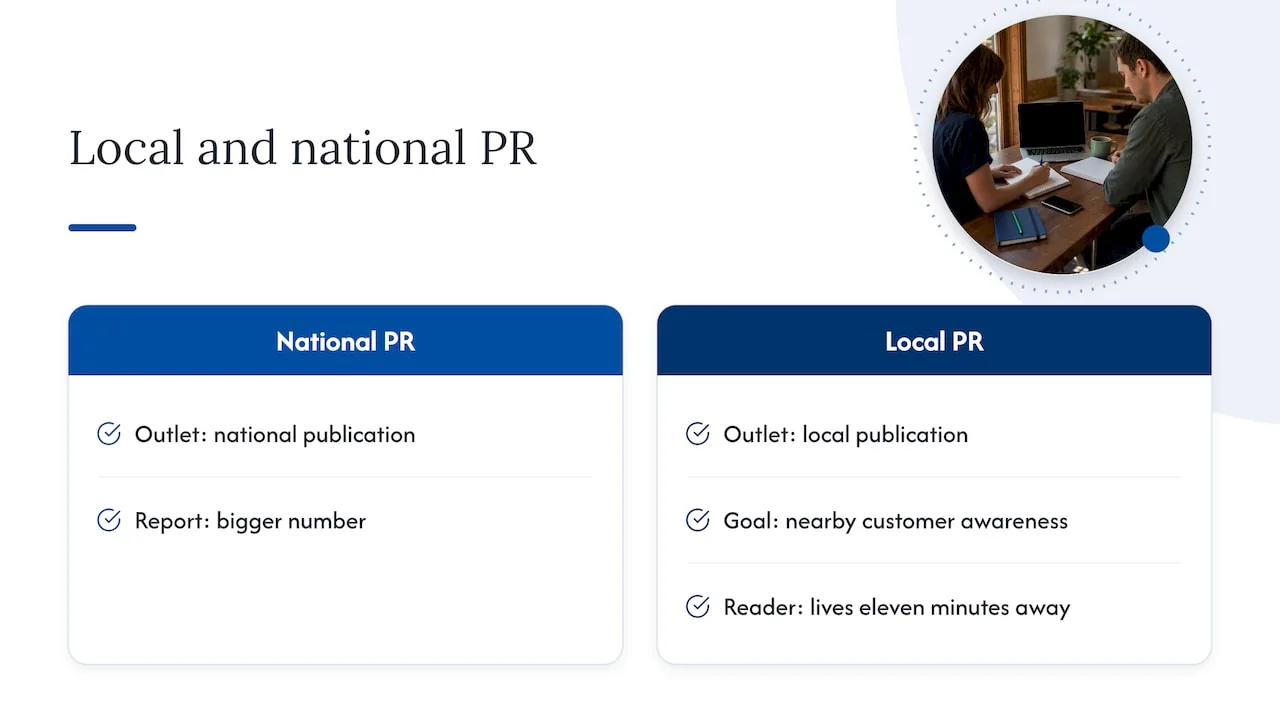
That last part is the real difference from national digital PR. A national outlet might give you a bigger number on a report. A local outlet gives you a reader who lives eleven minutes away and needs a plumber, a dentist or a tent for Saturday.
How it differs from the things it gets confused with
| Discipline | Main goal | Typical output | Where local digital PR overlaps |
|---|---|---|---|
| Traditional PR | Reputation and relationships | Press coverage, events, statements | Same relationship-building, but online results are tracked and linked |
| Local digital marketing | Direct leads and sales | Ads, social posts, email, local SEO | PR supports these channels with credibility and links |
| Link building | Links to specific pages | Guest posts, directories, resource links | Local PR earns links as a byproduct of real coverage |
| Local SEO | Visibility in the map pack and organic results | Profile, citations, reviews, location pages | PR adds trust and relevance signals around that foundation |
PRSA also frames PR as relationship-building with publics rather than pushing products, a protector of reputation that keeps working when you are not actively advertising. That is a useful test for any local PR idea: would a reporter or community organizer care about this if there were no product attached?
Why it matters for local visibility
Three reasons, in order of how much weight we would give them.
1. Third-party credibility. PRSA notes that earned coverage carries credibility paid advertisements cannot replicate, which can lower customer acquisition costs over time. A local reporter writing about your business is a stronger signal to a reader than your own claim of being “the best in town.”
2. Local relevance for search. A link from a locally relevant page does something a generic link does not: it supports your geographic and topical expertise. Google’s own guidance says links can help it discover pages and can corroborate what you write about. A mention in a city news site next to your service area name is exactly that kind of corroboration.
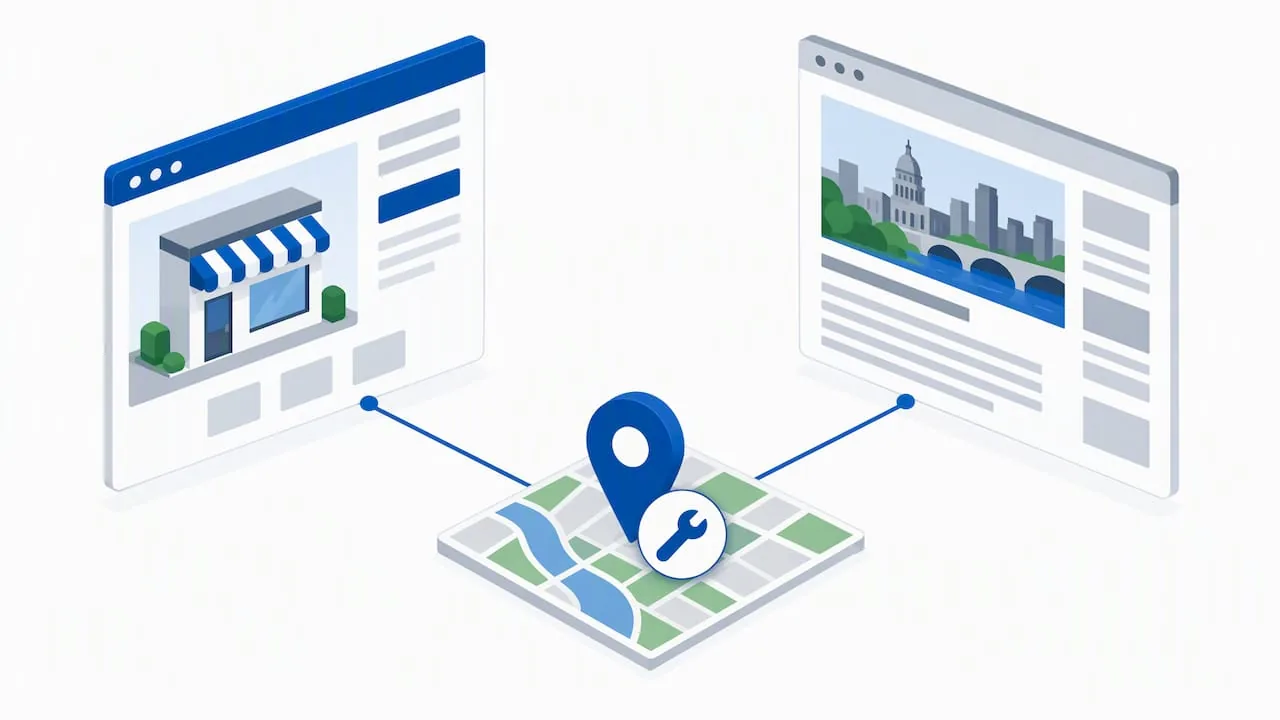
3. Trust signals for AI answers. The PR industry itself now describes its role as contributing to content that signals credibility and authority to the algorithms that decide which businesses get recommended. When an AI tool assembles an answer about “best family dentist in Tulsa,” consistent third-party mentions are part of what it can draw on. Our guide to AI search for local businesses covers that side in depth.
A caution we repeat to every client: Google says it uses page-level signals and site-wide signals and classifiers to understand and rank pages. No single link, and no single press hit, decides your position. Treat PR as one input among many, not a switch.
How digital PR link building works
Digital PR link building earns links by providing useful information or expert commentary that others naturally want to cite, rather than paying for placements. The mechanics are simple, even if the execution is not:
- You create something citable: a local data point, a useful tool, a timely expert opinion, a community initiative.
- You pitch it to the people who cover that place and topic.
- They publish, and when it makes sense for their readers, they link to the source.
The local twist is what makes a link valuable. A link from a city news site, a regional business journal, a school district page or a local nonprofit tells search engines the same thing it tells a human reader: this business is part of this community. If you want the link-building tactics beyond press, such as sponsorships, partnerships and resource pages, our 90-day community-first local link building plan lays them out week by week.
What a good local link looks like
- Local relevance: the page is about your city, county or neighborhood, or serves people who live there.
- Editorial context: the link sits inside a real story or resource, not a footer or a paid directory block.
- Topical fit: a dentist featured in a health column beats a dentist listed on a general coupon page.
- Real audience: the outlet has readers, not just a domain name.
One honest note on audiences. Pew Research Center found that Americans prefer to access local news online (37%) or via TV (41%), and that local TV stations still hold the largest audience share among local news providers. That study is from 2018, so treat the exact figures as a snapshot, but the lesson holds: do not ignore local TV newsroom websites just because they are not blogs. The same research found that 61% of Americans feel local journalists should not share personal views on local issues. Readers value accuracy, so pitch facts and useful context, not promotion.
How to run a local digital PR campaign
The approach we recommend follows the same shape as the one outlined in industry guidance: analyze competitors and target publications, develop story-first ideas using data where useful, build a media list and tailor outreach to local journalists. Here is how that works in practice.
Step 1: Audit what is already working
Search your service terms plus your city and note which local outlets appear, who they quote, and which of your competitors earned mentions. Check your own existing mentions too. Many businesses have unlinked coverage sitting there; a polite request to add a link is the cheapest win in PR.
Before you pitch anyone, make sure the destination is ready. A reporter who clicks through to a thin or outdated site, or a profile with inconsistent details, will not link. Our local SEO audit checklist starts with the Google Business Profile for exactly this reason.
Step 2: Find a story, not an announcement
Local reporters get dozens of pitches a day that read like ads. The ones that land have a news hook. Strong local angles for service businesses include:
- Local data. Anonymized trends from your own work (the most common emergency call in the first cold snap, the busiest weekend for event rentals) or a short survey of local customers.
- Seasonal expertise. A roofer explaining what hail season does to shingles in your county, delivered before the storm, not after.
- Community action. A free clinic day, a sponsored youth team, a donation drive with a clear number attached.
- Expert commentary. A lawyer, dentist or electrician offering a plain-language reaction to a local regulation, outage or event.
- People stories. A team member’s 25 years in the trade, a family business milestone.
Pick one angle and make it specific. “We care about our community” is not a story. “We replaced 40 smoke detectors for seniors in three neighborhoods” is.
Step 3: Build a short media list
Twenty well-chosen contacts beat two hundred random ones. Include:
- the local daily or weekly newspaper and any hyperlocal news site
- local TV and radio station websites
- the regional business journal
- city or neighborhood blogs and newsletters
- chambers of commerce, trade associations, schools and nonprofits that publish member news
Note what each person covers and what they published recently. Reference it in your pitch.
Step 4: Pitch like a human
Keep the email short: the hook in the subject line, two or three sentences on why it matters to their readers, one supporting fact, and an offer of a quote, photo or data. Skip the attachments and the mass blast. Follow up once.
Step 5: Turn coverage into compounding assets
When a story runs, share it, add it to a “press” or “in the news” page, and thank the reporter. Then notice what else it can do: coverage can support the claims on your location pages, give your Google Business Profile posts something real to point to, and feed your reviews and referral conversations.
Single-location business or multi-location brand?
This is where most advice falls short, because the two situations need different playbooks.
Single-location businesses have one advantage: depth. You can be the known expert in one community. Concentrate on a handful of local outlets, show up in person at local events, and build relationships with two or three reporters who cover your category. A steady cadence of small, genuine stories usually beats one big campaign.
Multi-location brands face a scale problem. A national press release rarely earns links that help a specific branch, and copying the same pitch into twenty cities is obvious to every editor. A workable model:
| Layer | Who owns it | What it does |
|---|---|---|
| Brand playbook | Corporate or agency | Story templates, approved facts, photo and quote library, outreach guidelines |
| Location story | Each manager or owner | One genuine local angle per quarter: a sponsorship, a local data point, a team member profile |
| Central tracking | Corporate or agency | One shared sheet of placements, links and the location page each should point to |
Two rules keep it clean. First, point each local link at that location’s own page, not the corporate homepage, so the local relevance lands where it should. Second, never publish the same “local” story with only the city name swapped. Editors notice, and the lack of a real local detail defeats the purpose.
If your business is regulated, such as a law firm or a healthcare practice, check that every pitch respects your professional advertising rules before it goes out. A good overview of how local search performance connects to links and placements for law practices is in this look at local SEO for law firms, and our own law firm SEO strategy covers the 90-day sequence.
Measuring results without overpromising
Links do not guarantee rankings, so a measurement plan that only counts links will mislead you. A tiered framework from PRSA works well: start with outputs (placements), then reach (impressions and referral traffic), then outcomes (leads and conversions), and finally long-term impact such as market share.
For a local business, that translates to:
| Tier | What to track | Where to find it |
|---|---|---|
| Outputs | Number of placements, outlet relevance, links earned, links pointing to the right page | Your PR log, backlink tool |
| Reach | Referral visits from coverage, branded search growth, profile views | Analytics, Search Console, Google Business Profile |
| Outcomes | Calls, form fills, direction requests and bookings that follow coverage | Call tracking, CRM, intake form questions |
| Long-term | Map pack and organic visibility for core terms, share of AI answer mentions, review growth | Rank tracking, manual AI checks, review dashboard |
PRSA also advises treating PR as a long-term trust strategy and reporting quarterly so you do not overreact to a single news cycle. We agree. Ask new customers how they found you, and add “saw you in the news” as an option. If you need a reporting structure that ties these numbers back to revenue, see our guide to local SEO reporting.
Our perspective
We build local SEO around the idea that a business is an entity: a clearly defined thing, in a clearly defined place, that other credible sources agree exists and is good at what it does. Press coverage, community links and consistent mentions are how that agreement gets written down on the open web.
That is why we do not treat PR as a trick for getting links. The businesses we see struggling in competitive markets rarely lack a link; they lack a clear, corroborated identity. Their profile says one thing, their website says another, and nobody outside their own channels has said anything about them. Fix the foundation first (profile, site, reviews, location pages), then give local outlets a reason to talk about you.
We also think the AI shift raises the value of this work. Answer engines lean on sources that look trustworthy and consistent, and earned local mentions are hard to fake. But we would not promise any client a ranking from one article, and you should be wary of anyone who does.
, NSYGHT
Where we fit
Local digital PR works best when it sits on top of solid local SEO. Our Local SEO services are month-to-month and cover Google Business Profile management, technical fixes, on-page work, and authority building, so the coverage you earn lands on pages and profiles built to benefit from it. If you serve multiple locations, or work in a sector such as dental or home services, we can walk through a plan specific to your market. Start at nsyght.com.
Common mistakes to avoid
- Pitching before the site is ready. Fix thin location pages and profile inconsistencies first.
- Chasing national outlets for local goals. One local newsroom link can do more for a branch than a broad national mention.
- Buying “press” placements. Paid or sponsored posts presented as editorial can cause problems, and they defeat the credibility you are after.
- Sending generic releases. Tailor each pitch to the reporter’s recent work.
- Stopping after one campaign. Relationships and mentions compound; a single burst fades.
- Judging by links alone. Look at calls, leads and branded search too.
FAQ
What is the difference between PR and digital PR?
Traditional PR builds reputation through relationships with media and the public, often measured by coverage and sentiment. Digital PR does the same work but aims for online placements that carry links, and tracks results through referral traffic, visibility and conversions. In practice the two overlap heavily, and good digital PR starts with the same thing as good PR: a story people want to tell.
Is local digital PR the same as local link building?
Not quite. Link building is the goal of earning links; local digital PR is one method for doing it, based on stories, data and community involvement. Other link tactics, such as sponsorships or resource page outreach, can sit alongside it.
Can a small business do local digital PR on its own?
Yes. Start with one local angle, a list of ten to twenty relevant contacts, and a short personalized pitch. The main costs are your time and consistency. Many owners hand it off once they have a working story pipeline and want it done every month.
How long does it take to see results?
Coverage can appear within days or weeks of a pitch, but search and lead impact builds more slowly and is rarely attributable to one article. Review progress quarterly across placements, reach, leads and visibility rather than expecting immediate ranking jumps.
Sources
- What Is Local Digital PR and Why Is It Important?
- What Is Public Relations? A Complete Guide
- PR vs Marketing: Key Differences Every Business Owner Should Know
- 10 PR Metrics You Should Be Tracking to Prove ROI
- The New Definition of Earned Media in the AI Era
- SEO Starter Guide: The Basics, Google Search Central
- A Guide to Google Search Ranking Systems
- Pew Research Center: Local News in a Digital World